Chimney Cake is a dessert that combines centuries-old tradition with a modern approach to baking. Known as kürtőskalács or trdelník, it has its roots in Transylvania and Slovakia. Its characteristic cylindrical shape, crispy caramelized surface and soft interior make it popular throughout Europe.
The baking process requires precision and patience. The key steps are the kneading of the yeast dough, shaping it on special rollers and baking it, which gives the dessert a golden color and crispy texture. Traditionally, the baking is done over an ember, where the dough rotates on its own axis, ensuring even browning. This preparation method gives the cake its unique flavor and aroma.
Modern cuisine has enriched the classic recipe with various toppings and flavor variations. Popular versions include sugar and cinnamon, nuts, chocolate, and even ice cream fillings. The culinary evolution has made kurtoshake an integral part of festivals, fairs and food trucks. The ability to combine the traditional recipe with new flavors has made this dessert popular all over the world. It has gained recognition among lovers of sweet pastries.
Traditional kurtoshkołacz recipe step by step
Making authentic kurtoshkołacz requires precise proportions and techniques to ensure the right texture. Careful mixing of the ingredients and temperature control at every stage are crucial.
Ingredient list
The classic recipe calls for:
- 500 g wheat flour (type 650)
- 200 ml whole milk (warmed to 38°C)
- 75 g butter (82% fat, melted and cooled)
- 2 eggs (lightly beaten before adding)
- 15 g fresh yeast or 7 g dried yeast
- 50 g caster sugar
- 5 g sea salt
The yeast is activated in the milk with a teaspoon of sugar and left for 8 to 12 minutes until a fluffy foam forms. With instant yeast, this step can be skipped and the yeast can be added directly to the flour.
Mixing and kneading technique
Mix the flour and salt in a mixing bowl, then add the milk with yeast, eggs and butter. Start mixing at low speed and gradually increase the speed.
Kneading time:
- Mixer: 10–12 minutes
- By hand: 15–18 minutes
Signs of a properly kneaded dough:
- Smooth, even surface without lumps
- Flexible – stretches without breaking
- Slightly sticky consistency (does not stick to dry hands)
Tip: To check if the dough is ready, perform a “window” test. A piece of dough stretched between your fingers should form a thin, translucent membrane without tearing.
Fermentation check
The risen dough should double in volume at a temperature of 24–26°C. In a cooler environment, fermentation takes up to 2 hours, while exceeding 30°C can lead to excessive gluten decomposition.
After rising, the dough is gently kneaded to remove the carbon dioxide. It is then rolled out into a 1 cm thick rectangle and left under a cloth for 10 minutes to reduce the gluten tension and make it easier to shape.
Tip: To prevent the dough from drying out, work on a silicone mat or a lightly moistened pastry board. If the edges crack, increasing the resting time before rolling again will improve the elasticity of the structure.
Homemade techniques for shaping and baking Chimney Cake
Preparing Hungarian Koloa at home requires creativity and adaptation of traditional methods. The classic method involves using wooden rolling pins and baking over an open fire, but modern solutions allow you to get the authentic taste in your own kitchen.
Shaping the dough
After the yeast dough has risen, the key step is to shape it correctly. Roll out the dough into a rectangle about 0.5 cm thick, then cut it into strips 1.5–2 cm wide. The length of the strips should be adjusted to the size of the baking tin.
Alternatives to traditional rolling pins:
- Beverage cans (e.g. beer or energy drinks)
- Rolling pins wrapped in aluminum foil
- Special silicone forms for layer cakes
Tip: Before rolling out the dough, it is advisable to grease the baking tray with a thin layer of vegetable oil. This prevents the dough from sticking and makes it easier to remove the finished product.
Wrap the strips of dough around the mold, pulling them slightly so that the next turns overlap. After wrapping the entire mold, gently press the connection points to ensure the dough sticks together during baking.
Baking techniques
There are several ways to prepare Hungarian sweet bread, depending on the available kitchen equipment.
- Baking in the oven:
- Preheat the oven to 190°C. Place the dough forms upright on a baking tray lined with baking paper and bake for 20–25 minutes, turning halfway through to ensure even baking.
- Grilling:
- You can recreate the traditional baking method on your garden grill. Set the grill to medium heat and place the cake tins on top. Turn them regularly for 6-8 minutes until they are golden brown and crispy.
- Baking on the stove:
- Heat the oil in a large, deep pot to approx. 180°C. Immerse the rolled-out dough in the pot for a few seconds, turning it to ensure even browning. Remove from the pot and drain excess fat on a paper towel.
Finishing and decorating
Immediately after baking, while the cake is still hot, roll it in a mixture of cinnamon and sugar or other toppings.
Suggested toppings:
- Ground nuts
- Coconut flakes
- Cocoa
- Powdered sugar
Carefully remove the baked cake from the mold and let it cool in an upright position. It tastes best right after baking, when the crust is crispy and the inside is soft and fluffy.
Tip: To intensify the flavor, you can brush the hot cake with melted butter before sprinkling it with sugar. This will make it easier for the sugar to stick and give the cake a richer flavor.
How to bake a Chimney Cake without special equipment
Making a Hungarian Kürtőskalács at home does not require any special equipment. Using the available kitchen tools, you can create a dessert with a flavor and texture similar to the traditional Kürtőskalács.
Alternative baking molds
Instead of wooden rolling pins, which are used in traditional methods, you can use everyday objects. Beverage cans are perfect as a base for shaping dough. Before use, they should be thoroughly washed, dried and wrapped in aluminum foil to create a smooth surface.
Alternatively, wooden rolling pins can be used, which can also be protected with foil to make it easier to remove the finished pastry. Empty paper towel rolls, wrapped in foil and lightly greased before applying the dough, also work well to create the characteristic hollow shape.
Tip: Cooling the tins or rolls before use makes it easier to apply the dough and prevents it from sticking.
Baking techniques without a specialized oven
A domestic oven is perfect for baking Hungarian fruit cake. Preheat the oven to 190°C. Place the cake tins upright on a baking tray lined with baking paper so that the cake does not come into direct contact with the tray.
Baking time is 20–25 minutes. It is worth turning the tins halfway through to ensure even baking and a golden crust. To achieve a similar effect to baking over a hot fire, you can turn on the grill function in the last few minutes.
An alternative method is to prepare the cake in a frying pan. This requires more attention, but allows you to control the baking process on an ongoing basis. Place the preheated pan over medium heat and turn the cake tin regularly until golden brown. This method works especially well with smaller cake tins.
Finishing and decorating the cake the homemade way
Coat the cake with the prepared mixture while it is still hot. Traditionally, cinnamon and sugar are used, but you can experiment with other ingredients:
- Ground nuts mixed with icing sugar
- Cocoa with vanilla sugar
- Coconut flakes with a little cinnamon
For a more intense flavor, it is worth brushing the hot pastry with melted butter before sprinkling. This treatment enriches the aroma and helps the sprinkles to spread evenly.
After cooling, the cake can be decorated. Melted chocolate or icing go perfectly with the crispy texture. To create decorative patterns, simply apply them with a teaspoon.
The shiny surface of a fruit cake, which is characteristic of professional baking, can be achieved by coating the cooled surface with a thin layer of sugar syrup. The syrup is prepared by dissolving 2 tablespoons of sugar in 1 tablespoon of water and heating the mixture until it becomes clear.
How to get a crispy and golden crust on a currant cake
Getting the perfect, crispy crust on a currant cake requires precise techniques at every stage of preparation. The consistency of the dough, the proper application of sugar and butter, and the control of baking temperature are crucial.
The secret of the perfect texture
The basis for a crispy crust is a properly prepared dough. It should have an elastic but not too loose structure. After rising, it should be rolled out gently to a thickness of about 0.5 cm.
Thicker strips may not bake evenly, and too thin may burn. Before rolling the dough onto the baking tray, it is worth lightly greasing the surface, which will help to obtain an even, golden coating. The strips of dough should be wrapped, pulling slightly so that the successive rolls overlap.
Tip: To create a characteristic surface pattern, you can make shallow cuts in the dough with a sharp knife before baking. The grooves will become more visible after baking.
The magic of sugar and butter
The crispy crust is created by caramelizing sugar and using butter in the right way. Before baking, the surface of the dough should be brushed with melted butter and then coated with sugar.
Sugars suitable for caramelization:
- Granulated sugar – for a classic, crispy texture
- Cane sugar – for a deeper caramel flavor
- Cinnamon sugar – for a more intense aroma
During baking, the sugar gradually melts and forms a golden layer. To ensure even caramelization, the cake tin should be rotated every few minutes.
Baking techniques for a perfect result
The baking temperature and time are crucial for the final texture of the crust. The oven should be preheated to 180–200°C. Too low a temperature will make the cake pale and soft, while too high a temperature can lead to burning.
The baking time is usually 20-25 minutes, but can vary depending on the thickness of the cake and the oven. It is best to rotate the tin every 5-7 minutes to ensure even browning.
Tip: In the last few minutes of baking, you can turn on the grill function to brown the surface and make the crust crispier.
After removing the cake from the oven, while it is still hot, you can sprinkle it with sugar or other toppings, such as ground nuts or coconut flakes. The warm surface will help the topping adhere better, creating an additional layer of flavor and texture.
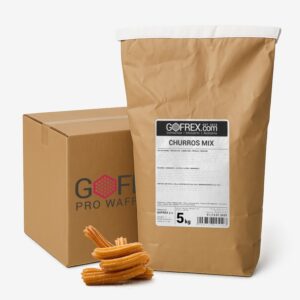
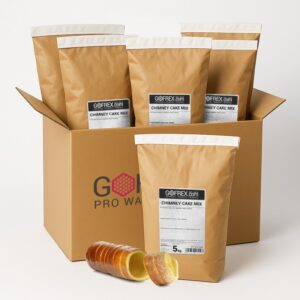
Ready-made dough for Chimney Cake from Gofrex.
The shop Gofrex.com offers a ready-made mixture for Chimney Cake, making it easier to bake this traditional dessert. The product is available in various packages – from 1 kg for home use to larger quantities for professional pastry shops.
Ingredients and nutritional values
The mixture contains carefully selected ingredients such as wheat flour, sugar, powdered eggs and whey. It also contains wheat gluten, emulsifier E471 and flour improvers.
Nutritional values per 100 g:
- 374 kcal
- 4.5 g fat
- 70 g carbohydrates
The mixture may contain traces of eggs and soy, which is important for people with food allergies.
Tip: To enrich the taste of the cake, you can add grated lemon or orange zest to the mixture. The citrus aroma goes perfectly with the traditional taste of cinnamon.
Preparation of the dough
The preparation of the dough is quick and easy. The ingredients should be mixed for 5 minutes on a low setting and then for 8 minutes on a medium setting using a dough hook. The mixture should have a uniform consistency.
After mixing, the dough is left to rise for 50–60 minutes. During this time, the gluten develops its structure, which ensures the elasticity and fluffiness of the baked goods.
Shaping and baking
After rising, the dough is ready to be shaped. Traditionally, the Hungarian sweet bread is wrapped around a special mold, but at home, you can use alternative solutions. A glass bottle or a wooden rolling pin wrapped in aluminum foil will work perfectly as a substitute mold.
Roll out the dough into thin strips and overlap them around the chosen mold. Bake at 175°C for about 15 minutes until golden brown and crispy.
After baking, the cake can be brushed with melted butter and coated in cinnamon sugar or chopped nuts for a traditional finish.
The ready-made mixture from Gofrex allows you to quickly prepare an authentic Hungarian kolács, while maintaining high quality and a taste similar to traditional baking. The product is suitable for both home kitchens and pastry shops expanding their offer with this popular dessert.
The best toppings and fillings for Chimney Cake
The Hungarian kolács (ring-shaped cake) offers a wide range of culinary interpretations. The right toppings emphasize its character, and the choice of ingredients depends on tradition, seasonal products and individual taste preferences.
Traditional flavor compositions
Classic versions are based on natural, simple ingredients. Cane sugar mixed with cinnamon is the basic topping, giving a slightly spicy aroma. Walnuts ground with vanilla create a crispy layer that contrasts with the soft interior of the cake. In some regions, it is popular to use poppy seed paste enriched with honey or orange zest.
Traditional fillings:
- Plum jam with a slightly sour taste, balancing the sweetness of the dough
- Homogenized curd cheese with raisins and lemon
- Ground almonds with cardamom and a hint of rose water
Modern interpretations
Contemporary variations introduce less obvious flavor combinations. Toppings are often enriched with:
- Dried raspberries powdered with powdered sugar
- Crumbled toasted sesame and sea salt
- Mixed with white chocolate
The fillings are mascarpone-based creams with amaretto liqueur or roasted pumpkin mousse. In line with the popular street food trend, versions with vanilla ice cream in the hollowed-out center of the cake are becoming increasingly popular.
Tip: To ensure that the topping adheres well, it is advisable to apply a thin layer of honey syrup (honey and water in a 1:1 ratio) to the hot cake and then coat it with the selected toppings.
Application techniques
The toppings are applied at three key moments:
- Before baking – sugar or nut toppings caramelize under the influence of high temperature
- Immediately after removing from the oven – warm cake absorbs chocolate or caramel toppings better
- After cooling – decorations made of crushed sponge cake or dried edible flowers retain an intense structure
For a more intense flavor, some fillings, such as pistachio cream, are injected into the inside of the cake after baking using a special applicator. For vegan versions, cashew nut pastes with maple syrup are popular and go perfectly with the crispy texture of the pastry.
Tips for storing and serving fresh Kürtőskalács
Hungarian Kürtőskalács, also known as Scoop Cake, tastes best fresh. However, there are effective ways to preserve its freshness and flavor for longer.
Optimal storage conditions
Ideally, the pastry should be eaten within a few hours of baking. If it needs to be stored, there are a few rules to follow.
Once the cake has cooled completely, it should be wrapped tightly in cling film. Avoiding the refrigerator prevents the dough from hardening too quickly. It is recommended to store it in a cool, dry place, away from sunlight.
When stored correctly, it will stay fresh for 1-2 days. Over time, the crispy crust will soften and the inside will become less fluffy.
Tip: Freezing is a good way to extend the storage life. Simply wrap the dough in cling film and then in aluminum foil. It can last up to 2-3 months in the freezer.
Refresh and reheat
To restore the original structure of the dough, you can gently reheat it.
Reheating methods:
- Oven: Preheat oven to 150°C. Wrap the cake in aluminum foil and heat for 5–7 minutes.
- Microwave: Place on a plate and heat on low power for 10–15 seconds.
- Frying pan: Cut into slices and fry lightly on a dry surface.
Heating for too long can dry out the cake.
Creative serving suggestions
Although the classic version of the cake does not require any additions, there are many ways to diversify the dessert.
Serving suggestions:
- With ice cream: Fill the inside with your favorite ice cream flavor.
- With custard: Injecting vanilla or chocolate custard will enhance the flavor.
- With fruit: Fresh fruit with whipped cream will emphasize the sweetness of the cake.
Each serving method should maintain the balance between the crispy crust and the soft interior, which is the key to the perfect taste of this traditional dessert.
Summary
The preparation of the Hungarian sweet cake is based on traditional recipes enriched with modern baking methods. The key steps include kneading yeast dough, precise molding and controlling the baking process. The original method requires specialized equipment, but homemade methods allow you to get the authentic taste using basic kitchen tools.
The perfect texture of a cake depends on a crispy, golden crust and a fluffy interior. With the right toppings and fillings, you can make both classic and modern desserts.
With the right storage methods and effective refreshment techniques, you can keep your baked goods fresh for a long time. Whether you make the dough from scratch or use a ready-made mix, every step requires attention to detail.
The Hungarian sweet bread is not only a dessert but also part of the culinary heritage. Its preparation can be a unique experience for every sweet lover.